
If you have a child who was diagnosed with ADHD but something still doesn’t quite fit, or a child diagnosed with autism whose attention and impulsivity challenges seem to go beyond what the autism diagnosis explains, you may be looking at the ADHD and autism overlap that researchers and clinicians now recognize as extremely common.
This combination is sometimes called AuDHD in the neurodivergent community. It is not yet a formal diagnostic category, but it reflects a real and well-documented experience: having both ADHD and autism at the same time, with traits from each condition that can sometimes amplify each other, sometimes appear to cancel each other out, and consistently make both diagnosis and support more complicated than either condition alone.
This post is a coach’s guide to understanding the ADHD and autism overlap, what it looks like in students, why it so often gets missed or misread, and what kind of support actually works when a student is navigating both.
What the Research Says About the ADHD and Autism Overlap
For a long time, clinicians were not allowed to diagnose ADHD and autism in the same person. The two conditions were considered mutually exclusive by diagnostic criteria. The 2013 revision of the DSM-5 changed that, formally allowing dual diagnosis and opening the door for research that confirmed what many clinicians and families had long suspected: the ADHD and autism overlap is not coincidental or rare.
Current research suggests that 50 to 70 percent of autistic individuals also meet criteria for ADHD. A 2025 longitudinal study of 165 adults with ADHD found that 44.8 percent showed meaningful traits of autism. And a 2025 neuroimaging study found that people with co-occurring ADHD and autism show distinct patterns of brain structure and connectivity, suggesting the combination is not simply additive but may represent a genuinely unique neurodevelopmental profile.
What this means practically is that the ADHD and autism overlap is not an edge case. It is one of the most common presentations a coach, teacher, or parent will encounter, and it deserves to be understood on its own terms rather than through either diagnosis alone.
Why the ADHD and Autism Overlap Gets Missed
The ADHD and autism overlap is frequently missed for several reasons, and understanding why helps parents advocate more effectively.
The conditions can mask each other. ADHD impulsivity can look like social enthusiasm in a student who would otherwise present as withdrawn. Autistic pattern-seeking and rule-following can mask ADHD disorganization in structured environments. Each condition can hide the other, producing a presentation that partially fits ADHD, partially fits autism, and fully fits neither in isolation.
Girls and students with inattentive presentations are especially underidentified. The same factors that lead to missed ADHD in girls, internalizing behaviors, high masking, social compensation, also lead to missed autism in girls. A student with the ADHD and autism overlap who presents as a high-masking girl may spend years receiving partial diagnoses or no diagnosis at all. Our post on ADHD in girls covers the masking dynamic in depth, and much of what applies there applies with even greater intensity to students navigating both conditions.
Clinicians may screen for one and stop. A child who receives an ADHD diagnosis in elementary school may never be screened for autism because the ADHD explains enough of the surface behavior. The reverse is also common: an autistic child whose executive function challenges are attributed to autism may never receive a thorough evaluation for ADHD.
The presentation can seem contradictory. Students with the ADHD and autism overlap sometimes crave structure intensely while simultaneously being unable to maintain routines. They may have deep, highly focused interests while also struggling to sustain attention on anything outside those interests. These apparent contradictions reflect traits from both conditions operating simultaneously, which can confuse parents and professionals alike.
If reminders, rewards, and “just try harder” aren’t working, there’s a reason. Discover what actually helps an ADHD brain get moving.
What the ADHD and Autism Overlap Looks Like in Students

Navigating the ADHD and autism overlap often present in ways that are genuinely difficult to categorize. Here is a breakdown of how the two conditions interact across key areas.
| Area | ADHD Alone | Autism Alone | ADHD and Autism Overlap |
| Attention | Distractible, difficulty sustaining focus | Deep focus on preferred interests, difficulty shifting | Both: easily distracted and intensely focused depending on the topic |
| Routine | Avoids routines, inconsistent follow-through | Seeks and depends on routines | Wants routine but can’t maintain it; distress when routines break |
| Social interaction | Impulsive, talks too much, misses cues | Prefers limited social interaction, struggles with unspoken rules | Wants connection, struggles with both impulse control and social interpretation |
| Sensory processing | Some sensory sensitivity | Often significant sensory differences | Sensory challenges amplified, harder to regulate and communicate |
| Emotional regulation | Reactive, intense emotions, quick to escalate | Difficulty identifying and expressing emotions | Both: intensity and difficulty naming what is happening |
| Executive function | Significant challenges across planning, initiation, organization | Variable; often stronger in rule-bound systems | Typically significant, especially in flexible or open-ended tasks |
| Masking | Less common | Common, especially in girls | Extremely common and extremely exhausting |
The student sitting in your kitchen who seems to desperately want routine but can never follow one, who has one consuming interest but can’t sit through a homework assignment, who melts down in ways that seem disproportionate and recovers slowly: this is often what the ADHD and autism overlap looks like in practice.
The Masking and Burnout Picture
One of the most important things to understand about the ADHD and autism overlap is the cumulative cost of masking.
Students with the ADHD and autism overlap are often masking two separate sets of neurological differences through a single school day. The autistic masking, suppressing stimming, monitoring social behavior, interpreting unspoken rules, is layered on top of the ADHD masking, managing impulsivity, compensating for executive function gaps, holding together the appearance of focus. Together, this double-masking is exhausting in a way that is genuinely hard to overstate.
The consequence is often what clinicians call autistic burnout, a state of profound exhaustion, increased sensitivity, and reduced capacity that occurs when the cost of masking finally exceeds the resources available. For students with the ADHD and autism overlap, burnout can look like sudden academic deterioration, withdrawal from activities they previously enjoyed, shutdown in response to demands that seemed manageable before, or significant regression in skills.
Burnout is not a behavior problem. It is a neurological response to sustained overload. And understanding it changes what support looks like significantly.
Recognizing AuDHD Burnout Before It Becomes a Crisis

Because burnout is such a significant risk for students with the ADHD and autism overlap, parents who know what to look for early have a real advantage. Caught early, burnout is recoverable with rest, reduced demands, and intentional support. Caught late, it can mean weeks or months of significantly reduced functioning.
Here are the early warning signs worth paying attention to:
A noticeable drop in the quality of masking. A student who has been holding it together at school suddenly starts coming home with more teacher notes, more social incidents, or more signs that they are struggling to manage in ways they previously could. The mask is slipping because the energy to maintain it is running out.
Increased rigidity around routines. A student who is approaching burnout often clings more intensely to routines and becomes more distressed when those routines are disrupted. This is the nervous system trying to reduce cognitive and sensory load by holding everything as predictable as possible.
Withdrawal from activities and relationships they previously enjoyed. This is one of the clearest signals. A student who stops engaging with their preferred interests, who pulls back from friendships they valued, is often conserving resources because there are simply none to spare.
Physical symptoms without a clear medical cause. Headaches, stomachaches, fatigue, and sleep disruption that escalate without an obvious physical explanation are often expressions of nervous system overload in students with the ADHD and autism overlap.
Shorter fuse and more frequent emotional flooding. When the regulatory buffer is depleted, even small triggers can produce big responses. A student who is normally able to recover from frustration in a few minutes now needs an hour, or cannot recover at all before the next demand arrives.
When you see three or more of these signs together, treat it as a signal that something needs to change, not a sign that your child is regressing or being difficult. Reducing demands, increasing predictability, and creating genuine rest time are the first responses. A conversation with your child’s coach, counselor, or therapist about what is happening is the second.
What Doesn’t Help (And Why)
Parents and educators who don’t yet understand the ADHD and autism overlap often try interventions that fit one condition but inadvertently worsen the other.
Highly flexible, unstructured support. Approaches designed for ADHD that prioritize novelty, variety, and spontaneity can be genuinely dysregulating for a student who also has autism and depends on predictability.
Rigid behavioral compliance systems. Point systems and behavioral charts that work for some autistic students may produce overwhelm and shutdown in students who also have ADHD impulsivity and emotional reactivity.
Treating masking as success. A student with the ADHD and autism overlap who appears fine at school is not necessarily fine. Appearing fine is often the output of enormous compensatory effort, and the parent who hears “they seem great in class” needs to understand that great in class frequently means destroyed at home. Our post on ADHD after-school meltdowns covers this dynamic directly.
Expecting neurotypical social development timelines. Social development for students with the ADHD and autism overlap happens differently and on a different timeline. Interventions that push for neurotypical social norms without accounting for the real neurological differences involved often produce shame rather than growth.
What Actually Works: A Coaching Approach to the ADHD and Autism Overlap
Coaching for students with the ADHD and autism overlap requires holding both sets of needs simultaneously, not alternating between them, but designing support that addresses the intersection.
Predictable structure with built-in flexibility. A student with the ADHD and autism overlap typically needs more structure than ADHD alone would suggest, but that structure has to be transparent, explained, and genuinely consistent rather than arbitrary. A homework routine that never changes is better than a flexible system. An emergency plan for when the routine breaks is essential.
Explicit rather than implicit instruction. ADHD and autism both respond poorly to assumed social knowledge and implied expectations. Coaching with students at this intersection means being direct and specific: “Here is what I mean. Here is what I am asking. Here is what done looks like.” This is not dumbing down. It is precision, and it is kind. Our post on executive function skills for students shows what this kind of explicit instruction looks like in practice.
Sensory and regulation awareness. A coaching session that doesn’t account for where a student is in terms of sensory regulation and emotional state will not be productive. This means being attentive to environment, checking in on state before diving into content, and building decompression into the session design.
Strength-based framing that names both conditions. Students with the ADHD and autism overlap often have remarkable strengths in their areas of deep interest, in pattern recognition, in honesty, and in the kind of focused expertise that comes from hyperfocus aligned with autistic interest. Coaching that sees and names those strengths explicitly changes how a student relates to their own brain.
Working with parents, not just students. The home environment is where the ADHD and autism overlap is most intensely felt by families. Our post on ADHD life skills covers the everyday skill-building that matters most in that environment. Coaching support that includes parents in understanding what their child is experiencing, and what to look for in terms of burnout signals, makes an enormous difference. Our post on ADHD parent support reset addresses the parent side of this directly.
A Note on Terminology
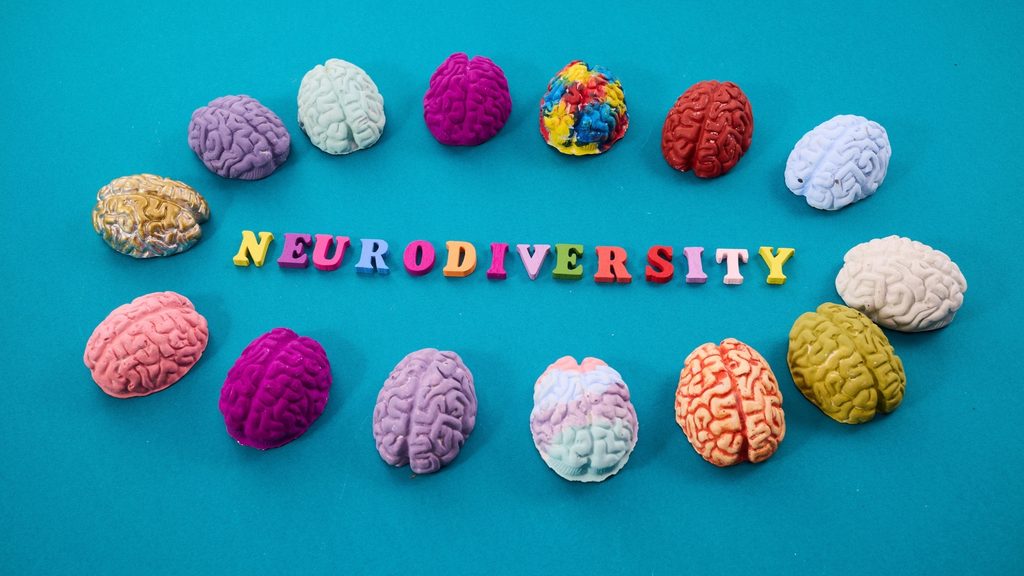
You may see AuDHD used interchangeably with terms like “co-occurring ADHD and autism,” “dual diagnosis,” or “ADHD autism comorbidity.” None of these is wrong, though the language carries different connotations in different communities.
AuDHD is a community term that many neurodivergent people use to describe their own experience, and many find it affirming because it names the combination as something coherent and recognizable rather than just two separate conditions stacked on top of each other. Clinically, a student will receive separate diagnoses for ADHD and autism spectrum disorder rather than an AuDHD diagnosis, since it is not yet a formal diagnostic category.
For parents navigating this, the most important thing is not the terminology but the understanding that the ADHD and autism overlap is real, documented, and has specific implications for how support should be designed. A coach or clinician who understands the interaction between the two conditions will serve your child significantly better than one who treats each diagnosis independently.
During ADHD Awareness Month, it is worth noting that AuDHD is one of the most underrecognized and underserved presentations in the neurodivergent population. Bringing accurate information about the ADHD and autism overlap into the broader conversation is part of what this month is for.
Getting an Evaluation for the ADHD and Autism Overlap
If you suspect your child may have the ADHD and autism overlap and only one condition has been formally evaluated, it is worth pursuing a comprehensive assessment that specifically screens for both.
Not all evaluators are equally equipped to assess for both conditions simultaneously, particularly in students who mask well. When seeking an evaluation, ask specifically whether the clinician has experience with dual diagnosis, with AuDHD presentations, and with high-masking students. A thorough evaluation should include parent and teacher reports, structured observation, and direct assessment of social communication, sensory processing, and executive function.
Our post on what is ADHD and does my child have it is a helpful starting point for parents earlier in this process. And once a diagnosis is in place, formal accommodations through a 504 plan or IEP are often especially important for students navigating the ADHD and autism overlap. Our post on 504 vs IEP for ADHD walks through what each plan covers and how to choose.
Coaching and the ADHD and Autism Overlap: What Families Tell Us
Families who come to Carolina ADHD Coaching with a student navigating the ADHD and autism overlap often say the same thing: they felt like they had been given two separate instruction manuals for their child and neither one fully worked.
What coaching offers is not a third manual. It is a relationship in which a student is understood as a whole person whose ADHD and autism traits interact in ways that are specific to them, not generic to either diagnosis. The goal is never compliance with a neurotypical standard. It is building the skills, the self-awareness, and the systems that let this particular student function well in their actual life.
We work with students ages 8 to 21, in person in Greenville, SC and virtually nationwide. If the ADHD and autism overlap describes your child’s experience, we would genuinely love to talk through what support could look like. Our post on does your child need ADHD coaching walks through what to look for when deciding whether coaching is the right next step. Our executive function assessment is a useful starting point for understanding where the specific functional gaps are, and our about page explains our approach in more depth.
Get an inside look at how our coaching works, what to expect, and how to get started. It’s free — and packed with helpful info for parents and students!
Download the Guide