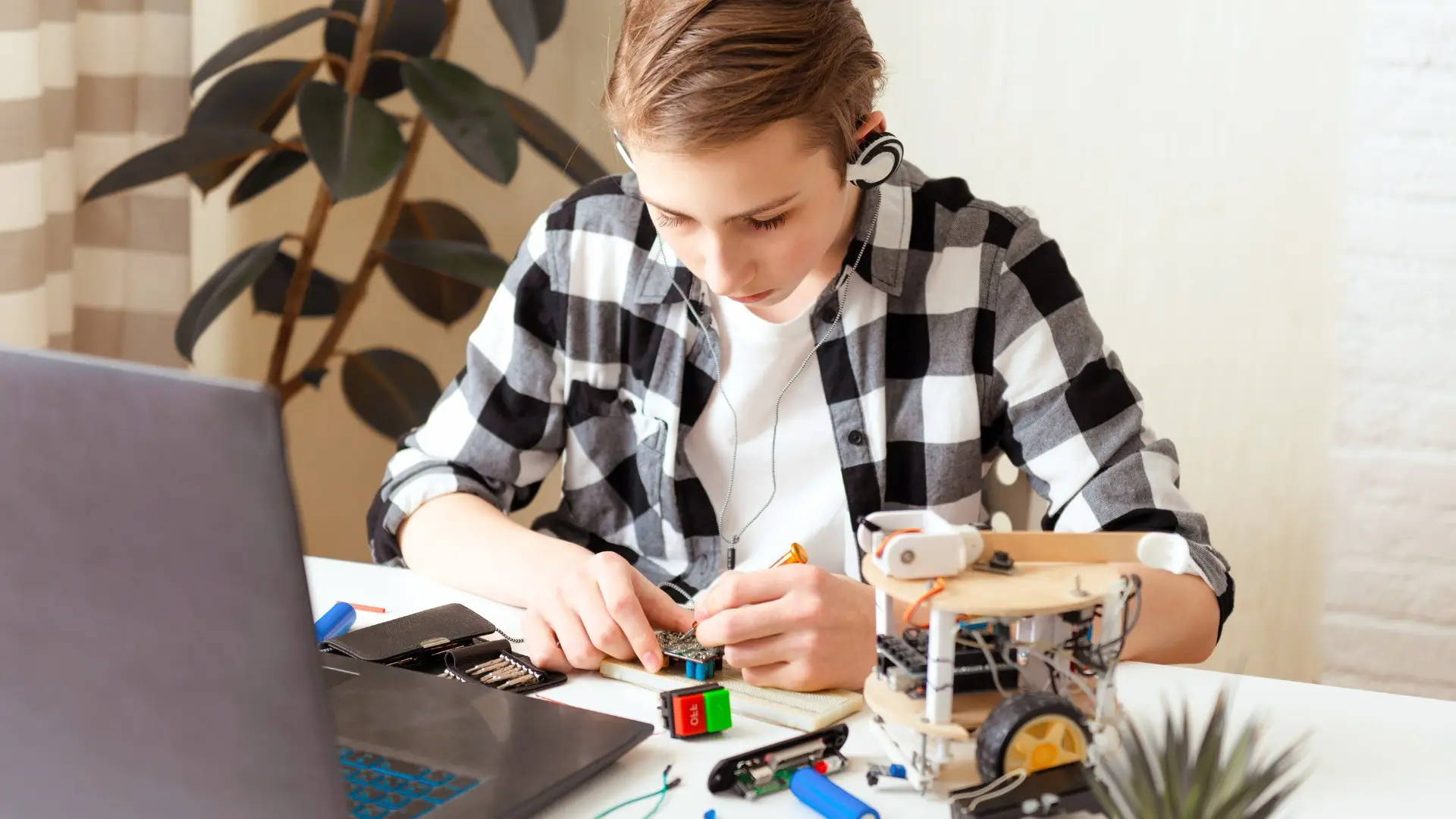
If you’ve ever sat next to your child while they finally got started on homework — after 45 minutes of stalling — you’ve already seen body doubling for ADHD in action. You didn’t help with a single math problem. You were just there. And somehow, that was enough.
Body doubling for ADHD is the practice of working alongside another person to help the brain get started and stay on task. It’s one of the most effective and underused strategies for kids and teens with ADHD — and most parents are already doing it without realizing it has a name.
The challenge is that body doubling on its own has limits. Parents can’t always be available. Kids don’t always want a parent hovering. And sitting next to someone doesn’t automatically teach planning, organization, or follow-through. That’s where ADHD coaching comes in — turning body doubling for ADHD from a helpful one-off moment into a repeatable system that builds real independence over time.
What Is Body Doubling for ADHD?
Body doubling for ADHD is the practice of working alongside another person—whether in person or virtually—to stay on task. The “body double” doesn’t need to help with the task. Their presence provides subtle accountability and reduces the brain’s resistance to starting.
How it looks in daily life:
- A parent sits at the table while a child does homework.
- A student logs into a virtual study session on Zoom with cameras on.
- Two friends meet at a coffee shop to finish separate tasks.
- A coach co-works with a student online for 15–20 minutes of focused effort.
The result? The task feels lighter, clearer, and more possible—simply because someone else is there.
Why Body Doubling Works for ADHD
- External Accountability
The ADHD brain often struggles with internal accountability (“I should just do this”). The presence of a body double provides external accountability: “They can see me start, so I start.”
- Social Attention Boost
ADHD brains are wired for interest-based motivation. Social presence acts as a subtle motivator, triggering dopamine and making boring tasks feel more rewarding.
- Reduces Task Initiation Struggles
Task initiation is one of the hardest executive function challenges in ADHD. A body double provides the nudge to move from thought into action.
Task initiation is one of the most common executive function challenges we see — for more on what that looks like day to day, read our post on 5 everyday executive function challenges in teens with ADHD.
- Regulates Emotional Overload
Tasks often feel bigger than they are. With someone nearby, emotions feel more manageable—less frustration, less fear of failure.
- Creates a Calmer Work Rhythm
Body doubling provides a built-in start/stop frame. A coach or peer might set a timer, pause for a break, then restart—helping ADHD brains that struggle with hyperfocus or time blindness.
If time blindness is a big issue for your child, our guide on time blindness in ADHD walks through exactly how to make time visible and predictable.”
Get an inside look at how our coaching works, what to expect, and how to get started. It’s free — and packed with helpful info for parents and students!
Download the GuideThe Limits of Body Doubling Alone
While effective, body doubling for ADHD has natural limits:
- Parents can’t always be the body double. Constant presence strains the parent-child relationship.
- Peers may not have consistent schedules. Friends aren’t always reliable partners.
- Tasks may still lack structure. Sitting with someone doesn’t automatically teach planning, prioritization, or organization.
- No long-term growth. Without coaching, kids don’t always learn to self-regulate.
That’s where ADHD coaching transforms body doubling for ADHD from a helpful hack into a sustainable system that builds independence over time.
How ADHD Coaching Turns Body Doubling Into Real Results
Step 1: Introduce the Start Ritual
Before body doubling begins, a coach builds a 2-minute start ritual (water sip, phone on DND, open exact task, start timer). This primes the brain to move quickly into action.
Step 2: Structure Study Sprints
Instead of “work until you’re done,” coaching uses 10–25 minute study sprints with breaks. Body doubling keeps students accountable during these sprints, and coaching makes them repeatable.
For a deeper look at what the first month of coaching looks like in practice, check out our post on what to expect from ADHD coaching in the first 30 days.
Step 3: Normalize Breaks
Without guidance, students might fidget or wander off. Coaches teach structured breaks (stretch, snack, 3-minute reset) so the student returns to the task reliably.
Step 4: Add Checkpoints
Large assignments get broken into checkpoints (topic → outline → draft). Coaches serve as accountability partners, using body doubling sessions to move through each stage.
Step 5: Fade Support Over Time
The long-term goal of executive function coaching is independence. Coaches gradually reduce body doubling frequency, teaching kids how to recreate the sense of external accountability with self-checklists, apps, or peer sessions.

Beyond Homework: Other Ways Body Doubling for ADHD Builds Success
Most parents think of body doubling for ADHD only in the context of homework or school projects, but the strategy can be applied far more widely. Because the principle is about external accountability and visible structure, body doubling can support any task that feels overwhelming or “too big to start.” Coaching helps families recognize these moments and build body doubling into daily routines, so kids practice the skill in multiple contexts.
Household responsibilities
Chores can be a daily battleground for families managing ADHD. Instead of repeated reminders or power struggles, body doubling turns chores into a structured, time-limited activity. A parent or sibling can sit nearby folding laundry while the child puts clothes away, or a coach can schedule a quick “clean-your-space sprint” during a virtual session. The presence of another person transforms the chore from a vague expectation into a clear, shared action window.
Extracurriculars and hobbies
Students with ADHD often love activities but struggle with the preparation or follow-through required to participate. Coaches can body double virtually while a student packs their sports bag, tunes their instrument, or organizes art supplies. This builds consistency and prevents last-minute stress, showing students that routines apply outside of academics too.
Transitions to adulthood
For older teens and college students, body doubling for ADHD supports skills like job applications, managing online coursework, or organizing dorm spaces. Virtual body doubling sessions allow them to complete important life tasks—writing a resume, registering for classes, scheduling medical appointments—without falling into the “I’ll do it later” trap.
We cover this in detail in our post on executive function tips for a smoother college transition.
Emotional regulation and confidence
One overlooked benefit of body doubling is how it impacts emotional load. Many kids feel intense shame or frustration when they freeze on simple tasks. Working alongside a nonjudgmental coach normalizes the struggle and replaces it with small wins. Over time, this consistency builds confidence: “I can start. I can finish. I can do hard things.”
By expanding beyond homework, families discover that body doubling for ADHD is not just a trick for study sessions but a life strategy. With coaching, kids and teens learn to use it for chores, projects, hobbies, and transitions—skills that make independence possible and help the entire household run more smoothly.
A Week in the Life: Body Doubling For ADHD With a Coach
- Monday: 20-minute co-working sprint with a coach; math homework starts on time.
- Wednesday: Virtual body doubling for ADHD; the coach stays quiet on Zoom while the student drafts the essay intro.
- Thursday: Parent joins for a 15-minute kitchen-table sprint; Pack & Stage is finished early.
- Sunday Reset: Student reviews the portal with the coach, stages the backpack, and schedules three body doubling sprints for the week.
Result: Starts happen earlier, tasks finish on time, and family stress drops as the routine becomes predictable.
The Science Behind Body Doubling
Research on ADHD emphasizes the importance of external scaffolds—visible time, structured accountability, and reduced distractions. Body doubling for ADHD is one of the simplest external scaffolds you can use. By placing another person alongside the student, the invisible (time, start, expectation) becomes visible. The brain registers, “It’s time to begin,” not because of willpower, but because the environment has shifted.
While limited studies exist that specifically analyze body doubling for ADHD, there is a strong foundation in the literature on social facilitation (the idea that people perform differently when others are present), accountability (the sense that someone else can see your progress), and executive dysfunction (the hallmark challenges of ADHD that affect planning, prioritization, and task initiation). All of these combine to explain why body doubling is so effective at helping kids and adults get started.
Social facilitation
Decades of research show that people often initiate and sustain effort more effectively when they know someone is observing. For a student with ADHD, simply having a coach present—virtually or in person—reduces procrastination. Body doubling for ADHD transforms a vague intention (“I’ll do it later”) into a clear cue (“I’m working now because someone is here”).
Accountability as an external motivator
The ADHD brain struggles with internal accountability, which is why reminders and promises often fail. A body double provides external accountability without nagging. When a student agrees to sit in silence with a coach for 15 minutes, they are more likely to follow through because someone else is gently holding the expectation.
Executive function support
Executive function skills like planning and task initiation develop more slowly in children with ADHD. Body doubling acts like training wheels—it doesn’t replace the skill, but it provides stability while the skill strengthens. Over time, with ADHD coaching, students learn how to recreate the sense of accountability and structure independently.
Coaching brings the science into daily life
On its own, body doubling may feel like a quick trick. But through structured coaching, it becomes a routine that integrates with start rituals, study sprints, and weekly resets. Coaches don’t just sit beside students; they teach students how to use body doubling for ADHD strategically—at the beginning of tough tasks, before transitions, or during homework sprints. That’s how the research moves from theory into real, lasting results.
FAQs About Body Doubling for ADHD
Is body doubling for ADHD just babysitting?
No. It’s a structured way to reduce paralysis and boost task initiation. Coaching ensures it builds independence, not dependence.
Can body doubling work for adults with ADHD?
Absolutely. Many adults use co-working spaces, study halls, or virtual focus sessions as body doubling.
Does body doubling replace tutoring or therapy?
No. Tutoring addresses academic content, therapy addresses mental health, and body doubling with coaching builds executive function skills. For a full breakdown of how these types of support compare, see our post on executive function coach vs. tutor.
How often should body doubling happen?
At least 2–3 times per week is effective at first. With coaching, students learn to rely less on others over time.
What if my child resists?
Start small—5–10 minutes. Use a positive script, not pressure. A coach helps reduce resistance by making the routine collaborative.
Where Families Use Coaching
At Carolina ADHD Coaching, we understand that every family needs flexible options for support. That’s why we offer both body doubling for ADHD and personalized coaching services locally in Greenville, SC, Charlotte, NC, and Fort Mill & York County, SC—as well as virtually across the United States. Parents searching for “ADHD coaching near me” or “virtual ADHD coaching” find that body doubling is one of the most practical strategies to help kids get started, stay focused, and actually finish their work.
In our Greenville ADHD coaching sessions, families often come to us after trying tutoring, rewards charts, or constant reminders at home. By introducing body doubling for ADHD, students learn to start assignments faster, reduce resistance, and experience calmer evenings. Our local presence in Greenville also allows us to connect with schools and community resources, so routines extend beyond the coaching session into daily life.
Families in Charlotte, NC benefit from both in-person and online support. We see a growing need for executive function coaching in large school districts where students juggle multiple teachers, sports schedules, and heavy homework loads. Through body doubling for ADHD, our Charlotte students learn how to block out time, use study sprints, and plan ahead—skills that translate directly into better grades and less family conflict.
In Fort Mill and York County, SC, parents often tell us their kids are bright but stuck in a cycle of procrastination and late nights. With coaching, we introduce structured body doubling sessions that give students a safe push to start. Over time, we teach them how to re-create the same environment independently, so success is not dependent on constant parent supervision.
Because we also provide virtual ADHD coaching across the U.S., families outside these local areas can still benefit from body doubling sessions. A coach can log on via video, co-work with the student, and guide short sprints that make homework, studying, or even chores more doable. Whether in South Carolina, North Carolina, or anywhere nationwide, Carolina ADHD Coaching brings the proven power of body doubling for ADHD into routines that stick.
Real-World Outcomes From Body Doubling + Coaching

Families often notice results within 2–4 weeks:
- Fewer missing assignments
- Faster starts on homework
- More consistent routines (Pack & Stage, Sunday Reset)
- Calmer evenings and mornings
- Parents shift from “nagging” to supporting
From “Stuck” to “Started”
Body doubling for ADHD works because it makes starting possible—and with coaching, it becomes a sustainable, independence-building system. Students learn to start on time, finish with less stress, and carry these routines into high school, college, and beyond.
Get an inside look at how our coaching works, what to expect, and how to get started. It’s free — and packed with helpful info for parents and students!
Download the Guide