The transition to college is often exciting.
It’s filled with new opportunities, greater freedoms, new friends — and a big step toward independence.
- For teens, this can feel thrilling.
- For parents? Sometimes it’s a little nerve-wracking.
After all… you got them through high school.
Now you’re wondering: How is college going to go when I’m not there to remind them about assignments, laundry, or managing their time?
Don’t worry — we’ve got your back with practical executive function tips for teens you can start using this summer.

Why Executive Function Skills Matter for the College Transition
Even if your teen has done a good job managing their own time in high school, college is an entirely different level.
Every dynamic shifts — whether they live on campus or commute.
They’re juggling more independence, less structure, and higher expectations — all at once.
Here’s what changes:
✅ Class schedules are irregular. No more bell-to-bell structure — they may have large gaps or entire free days.
✅ Professors won’t give daily reminders. Assignments and deadlines are the student’s responsibility to track.
✅ There’s less adult oversight. No one’s checking if they’ve eaten, done laundry, or gone to class.
✅ Distractions multiply. Social events, clubs, gaming, and the freedom to say “I’ll do it later” are constant pulls.
✅ Self-advocacy is required. If they need help or accommodations, they must seek it out — no more parent/teacher conferences.
The good news: Executive function skills can be built — and the summer before college is the perfect time to strengthen them. Let’s explore 5 executive function tips for teens to help start the school year with confidence.
Related Reads:
- 5 Executive Function Strategies That Actually Work
- How Extracurriculars Build Executive Function Skills in Teens
- Top 10 Executive Function Skills Teens Build Through Coaching

Tip #1: Practice Independent Time Management This Summer
One of the biggest challenges for new college students? Managing time without constant reminders.
High school often provides structure: same schedule every day, teachers reinforcing due dates, parents helping juggle activities.
In college, that scaffolding disappears — and teens need to manage classes, assignments, and downtime on their own.
This summer is the perfect time to practice.
✅ Encourage your teen to start using a planner or digital calendar (Google Calendar, Notion, paper planner — whatever works).
✅ Let them take the lead on managing summer commitments — part-time work, volunteer hours, social plans.
✅ Resist the urge to remind them about every little thing; give space to practice and problem-solve.
✅ Have conversations about how they’ll handle busier weeks or unexpected schedule changes.
Building these habits now helps make time management feel less overwhelming when the fall semester begins.
✨ One of the biggest things we suggest: Have your teen look at their schedule now and plan in two non-negotiable study blocks — 45 minutes to an hour each week. They need to treat this like a job or another class. Yes, they’ll likely need reminders at first — but building this rhythm now will make it feel natural when college begins. ✨
Tip #2: Build Systems for Managing Assignments and Materials
In college, organization is everything — but no one’s going to be there to check binders or folders.
Between multiple classes, online portals, emails, and physical materials, it’s easy for things to get lost in the shuffle — especially for teens still developing executive function skills.
Help your teen set up simple systems this summer:
✅ Explore digital tools — a folder system on Google Drive, or an app like Notion or OneNote for tracking assignments.
✅ Practice using a single, consistent place to write down deadlines and to-do lists.
✅ Talk about how they’ll manage both digital AND physical materials (laptop, notebooks, textbooks).
✅ Encourage them to test what works — now’s the time to experiment, before college starts.
The goal isn’t perfection — it’s helping them head to campus with a few go-to tools and routines already in place.
Tip #3: Strengthen Self-Advocacy and Communication Skills
In high school, parents and teachers often help bridge the gap when a student is struggling.
In college? Self-advocacy becomes essential — and it’s a skill many teens haven’t practiced much.
This summer is a great time to help your teen build those muscles:
✅ Practice writing emails to adults (professors, advisors, housing office) — clear, polite, and to the point.
✅ Talk about how and when to ask for help — before a situation becomes overwhelming.
✅ If your teen has accommodations, help them understand the process for accessing support at the college level — it’s often very different from high school.
✅ Encourage them to rehearse using office hours and campus resources — these are there for them, but they have to take the first step.
Being able to speak up and seek help early can make a huge difference in how smoothly the first semester goes.

Tip #4: Work on Daily Life Skills for Independent Living
College isn’t just about academics — it’s the first real test of independent living for many teens.
And executive function skills show up everywhere: from getting out the door on time to making sure they have clean clothes for class.
This summer is the perfect time to build (or sharpen) real-world skills:
✅ Practice doing laundry start to finish — not just tossing it in, but folding and putting it away.
✅ Review basic meal prep — even if it’s simple grocery shopping, microwaving, or making a few go-to meals.
✅ Talk about budgeting basics — managing a bank account, using a debit card, understanding how fast spending adds up.
✅ Set up a routine for managing prescriptions, doctor appointments, or anything health-related they’ll need to handle themselves.
These small steps build confidence — and prevent those classic first-year “oops” moments that can quickly turn stressful.
Tip #5: Develop a Resilient Mindset for Managing Stress and Setbacks
No matter how well-prepared your teen is, college will bring challenges — late nights, tough professors, social ups and downs, and times when things don’t go as planned.
One of the most valuable executive function skills they can build is emotional regulation — the ability to manage stress, adapt, and keep going when things get hard.
This summer, help them start building that mindset:
✅ Normalize the idea that setbacks are part of growth — not signs of failure.
✅ Talk about healthy ways to cope with stress — exercise, downtime, supportive conversations.
✅ Discuss when and how to reach out for support — whether it’s counseling services, academic advisors, or trusted adults.
✅ Reinforce the message: It’s okay to ask for help — that’s a skill, not a weakness.
Helping your teen approach college with resilience will serve them far beyond freshman year.
One of our favorite executive function tips for teens is this:
✨ In the moment, things can feel HEAVY — missed a class, forgot an assignment, roommate asked them to tidy up. Help your teen practice a simple “1-2-3” check: Will this matter in a day? In a week? In a year? This quick reset helps keep small setbacks in perspective — and builds resilience for the bigger challenges ahead. ✨
How Coaching Can Help Build Executive Function Skills for College Success
If your teen is heading to college and you’re feeling a little nervous about the transition — you’re not alone.
Many students (even high-achieving ones!) head off to campus still developing the executive function skills they’ll need to thrive on their own. And that’s okay — these skills can absolutely be strengthened with the right support.
ADHD and executive function coaching helps teens:
✅ Build routines for managing time and assignments
✅ Strengthen organization and planning skills
✅ Practice self-advocacy and communication
✅ Develop resilience and healthy coping tools
✅ Increase confidence heading into college life
👉 The transition to college doesn’t have to be overwhelming — for teens or parents. With practical executive function tips for teens and the right support, your family can navigate this exciting next step with more confidence and ease.
We’d love to support your family through this exciting next step.
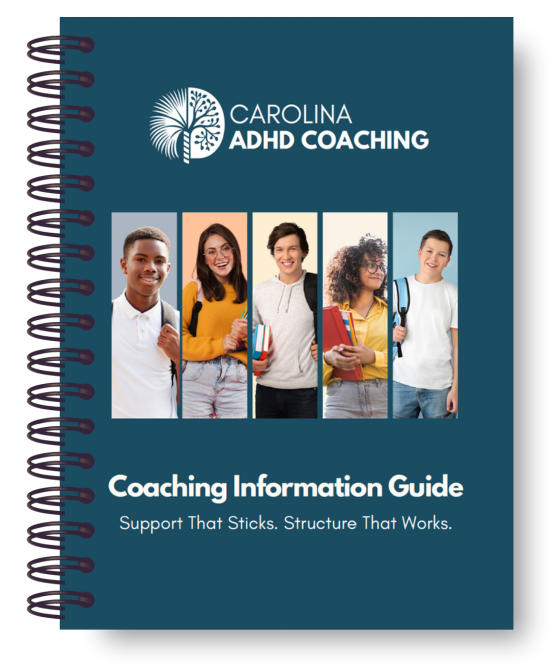
Get an inside look at how our coaching works, what to expect, and how to get started. It’s free — and packed with helpful info for parents and students!
Download the Guide