
Executive function skills for students shape almost everything about school success, but they are often invisible until something starts falling apart.
A student may be bright, verbal, creative, and full of potential — and still miss assignments, forget deadlines, melt down over long-term projects, or need constant reminders to do what they already know they should do. Parents see the struggle. Teachers see the inconsistency. The student often feels the shame of both.
That is why understanding executive function skills for students matters so much.
When people talk about school struggles, they often focus on content. They ask whether the student understands the lesson, studies enough, or is trying hard enough. But many students are not mainly struggling with ability. They are struggling with the systems that help them use their ability consistently.
That is where executive function skills for students come in.
These are the mental skills that help students plan, organize, manage time, start tasks, shift between activities, regulate emotions, and follow through. When these skills are strong, students are more likely to function independently. When they are weak, students often look careless, unmotivated, or irresponsible even when they genuinely want to succeed.
As a coach, I see this all the time.
A child knows the material but cannot get the assignment turned in. A teen wants better grades but waits until panic takes over to begin. A student has a planner but never uses it in a way that actually helps. Parents end up carrying the whole system, and everyone starts feeling frustrated.
This is why I think we need a more practical conversation about executive function skills for students.
Not every skill matters equally in every season. Not every student needs help with the same things. And not every strategy that sounds good on paper actually works in real life. The goal is not to throw a hundred “tips” at families. The goal is to figure out which executive function skills for students matter most, what they look like in everyday life, and how to build them in ways that actually stick.
This post is designed to help with that. We’ll look at the executive functioning skills that matter most for students, how to recognize when they are weak, why so many students struggle with them, and what helps families build stronger systems over time.
Start Here: Executive Function Skills for Students Are More Than “Being Organized”
When families first hear the phrase executive function skills for students, they often think of organization.
And yes, organization is part of it.
But executive function skills for students are much broader than keeping track of folders or remembering homework. They include the mental processes that help a student manage tasks, manage themselves, and move from intention to action.
That includes:
- planning
- organization
- task initiation
- time management
- working memory
- emotional regulation
- impulse control
- prioritization
- self-monitoring
- flexibility
This is one reason school can feel so hard for some students even when they are clearly smart. The academic material may not be the main problem. The process around the material is where things are breaking down.
A student can know exactly how to solve the math problems and still fail math because they lose the assignment, forget to turn it in, or cannot start without help. A student can understand a book perfectly and still bomb the project because they misjudged the timeline, did not break the task down, and froze when it felt too big.
That is why executive function skills for students are foundational.
They are the hidden layer underneath performance.
And when families understand that, they often stop asking, “Why can’t my child just do it?” and start asking, “Which skill is weak here, and what support would make this easier?”
That is a much more productive question.
<hr class="s
Get an inside look at how our coaching works, what to expect, and how to get started. It’s free — and packed with helpful info for parents and students!
Download the GuideWhat These Skills Look Like in Everyday Student Life

One reason executive functioning can be confusing is that the skills themselves sound abstract.
Planning.
Organization.
Self-monitoring.
Cognitive flexibility.
Those words can feel distant from everyday life.
So it helps to translate executive function skills for students into real-world school situations.
Planning looks like knowing that a project due Friday cannot wait until Thursday night.
Organization looks like keeping track of assignments, materials, and where things belong.
Task initiation looks like starting the work before a parent or teacher has to step in five times.
Working memory looks like remembering directions long enough to act on them.
Time management looks like estimating how long something will actually take and adjusting accordingly.
Emotional regulation looks like being able to stay with a difficult assignment without melting down the moment frustration rises.
Self-monitoring looks like noticing that you are off track before it becomes a full disaster.
When these executive function skills for students are working reasonably well, daily life feels smoother. When they are weak, families often experience chronic friction:
- missed work
- overwhelm
- procrastination
- incomplete routines
- school stress
- emotional shutdown
- constant reminding
That is why these skills matter so much.
The Executive Function Skills for Students That Matter Most
There are many executive functioning skills, but not all of them create the same amount of visible school stress.
If I had to name the executive function skills for students that most often affect daily success, I would start with these five:
- Task initiation
This is one of the biggest pain points for many students. It is the ability to get started without waiting until the last minute, the panic moment, or the parent reminder loop. Weak task initiation often looks like procrastination, avoidance, stalling, or endless “I’ll do it later.”
- Time management
This is the skill that helps students estimate time, pace themselves, and use available time well. Weak time management often shows up as chronic lateness, underestimating homework time, or starting everything too late.
- Organization
This is the ability to keep track of materials, tasks, systems, and what belongs where. Weak organization often creates missing assignments, messy backpacks, confusing digital systems, and a lot of family stress.
- Working memory
Working memory helps students hold information in mind long enough to use it. Weak working memory often looks like forgotten instructions, incomplete steps, and “I forgot” being a very real answer.
- Emotional regulation
This is often left out of conversations about executive functioning, but it matters enormously. A student who cannot manage frustration, embarrassment, or overwhelm will have a much harder time using the other executive function skills available to them.
These are not the only executive function skills for students, but they are often the ones that create the most day-to-day friction.
And because they interact with each other, one weak point can easily affect everything else.
For example, weak time management feeds procrastination. Weak emotional regulation makes task initiation harder. Weak organization increases overwhelm. Weak working memory makes routines fall apart.
This is why families often feel like “everything” is hard.
Usually, several executive functioning skills are colliding at once.
Why Students Struggle to Build These Skills
A lot of people assume that executive function skills for students should simply develop with age.
Sometimes they do. But for many students — especially those with ADHD, anxiety, executive dysfunction, learning differences, or uneven maturity — these skills do not strengthen automatically just because expectations rise.
In fact, the problem often becomes more visible when school starts demanding more than the student’s systems can handle.
Elementary students may get by because routines are simple and adults are managing more of the structure. But by middle school or high school, students are expected to track assignments independently, juggle multiple teachers, plan ahead, and manage long-term work with much less support.
That is when weak executive function skills for students often become impossible to ignore.
And the stress of school can make those skills even harder to access.
A student who is tired, anxious, ashamed, overstimulated, or constantly corrected is going to have a harder time planning, shifting, remembering, and following through.
That is why building these skills is not just about instruction. It is also about environment, support, and nervous system load.
Executive Function Skills for Students With ADHD
This is where a lot of families find clarity.
Students with ADHD often have real delays or inconsistencies in the exact mental skills school depends on most. That is one reason executive function skills for students and ADHD are so closely connected.
A student with ADHD may:
- know what to do and still not start
- write the homework down and still forget it exists
- want to succeed and still lose track of the timeline
- intend to follow through and still get derailed by distraction, overwhelm, or time blindness
This is one reason ADHD students are so often described as “capable but inconsistent.” The inconsistency is part of the struggle.
It is also why many families end up searching for:
- executive functioning skills for kids
- executive functioning skills for teens
- executive functioning skills ADHD
- how to improve executive functioning skills
They are looking for ways to make school life more manageable.
When executive function skills for students are weak, ADHD can amplify the problem because the student is already working harder to regulate attention, control impulses, manage time, and tolerate boring or frustrating demands.
That does not mean the student cannot grow these skills.
It means they often need more external structure, more repetition, more coaching, and more realistic expectations while the skills strengthen.
How to Build Executive Function Skills for Students in Real Life
The good news is that executive function skills for students can absolutely be built.
But they are usually not built by lectures.
Students rarely become more organized because someone gave a better speech about responsibility. They do not become better at time management because a parent gets more frustrated. They do not learn task initiation because adults repeat, “Just start.”
What helps is support that makes the skill visible, practical, and repeatable.
Build one skill at a time
Trying to “fix everything” usually overwhelms both the student and the family. A better approach is to pick one of the most important executive function skills for students and focus there first.
Externalize the system
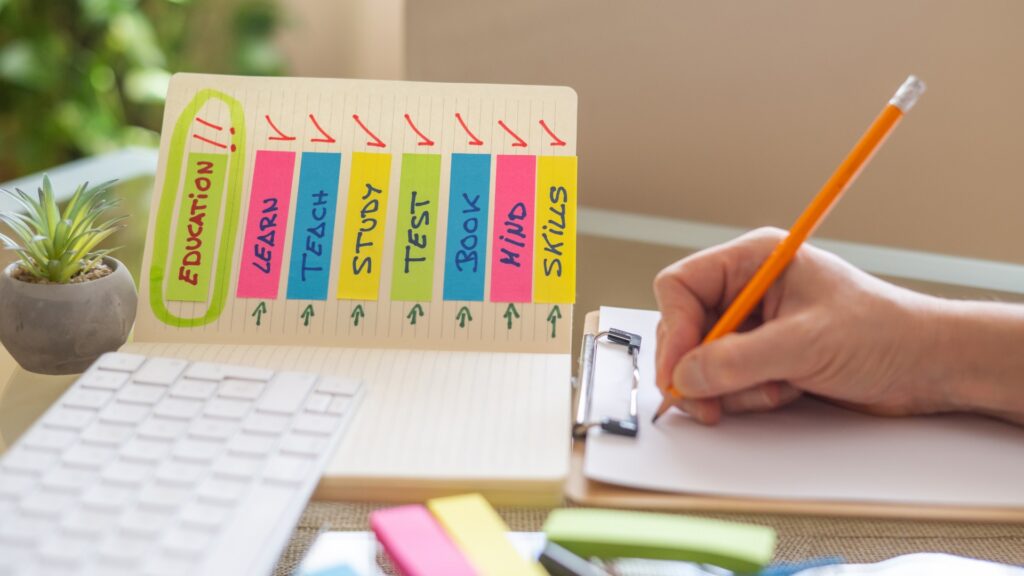
Students do better when the skill is outside their head. Use planners, checklists, visual schedules, timers, sticky notes, or routines that live in the environment.
Practice before the crisis
A lot of families only talk about executive function when something has already gone wrong. But executive function skills for students are easier to build when the conversation happens earlier — during planning, not just after failure.
Make it concrete
“Be more responsible” is too vague. “Write the assignment in your planner before you leave class” is teachable.
Reduce friction
If a system is too complicated, students will not use it consistently. The best supports are usually the simplest ones.
This is why things like executive functioning tools for students, executive function activities, and executive functioning skills checklist searches are so common. Families want something practical they can actually use.
That is the right instinct.
What Parents Should Focus On First
Parents do not need to become executive function experts overnight.
If you are trying to support executive function skills for students at home, I would focus on three things first:
- Predictable routines
Routines reduce the number of decisions students have to make. That lowers the executive function load.
- Visible planning tools
A system only helps if it can be seen and used. Invisible expectations are hard for many students to follow consistently.
Students grow these skills better when adults respond with curiosity and structure instead of shame and panic.
This does not mean there are no expectations. It means the expectations are paired with better scaffolding.
That is what makes the growth possible.
Executive Function Skills for Students by Age
One thing families often forget is that executive function skills for students look different at different ages.
In elementary school, students often need support with:
- simple routines
- transitions
- remembering materials
- emotional regulation
- visual cues and adult co-regulation
By middle school, more pressure lands on:
- planning
- time management
- tracking assignments
- organization across classes
- beginning long-term work earlier
By high school, the demands rise again:
- managing multiple deadlines
- communicating with teachers
- balancing academics and activities
- working more independently
- sustaining motivation over time
This is one reason searches like executive function skills by age and executive functioning skills for middle school are so common. Families are trying to understand what is realistic.
That matters.
We do not help students by expecting sixteen-year-old output from a skill set that is still developing like a much younger learner. We help them by understanding developmental fit and building support accordingly.
When Executive Function Coaching Helps
Sometimes families can make excellent progress with better routines, better systems, and more awareness at home.
Sometimes they need more support.
That is where coaching can help.
A lot of students do not just need one more reminder. They need help understanding how their brain works, where their patterns break down, and how to build systems that fit those patterns. That is where executive function skills coaching, executive functioning skills coaching, and coaching executive functioning skills can be so helpful.
- identify their weak points
- practice routines
- build planning habits
- use tools consistently
- reflect on what derails them
- recover faster when something goes wrong
- build independence without feeling ashamed
This is also why students who are bright but inconsistent often do well with coaching. The goal is not to make them work harder. The goal is to help them work with more structure and less friction.
A Better Way to Think About Executive Function Skills for Students
If I could shift one thing for families, it would be this:
Stop thinking of executive functioning as a side issue.
Start seeing it as the system underneath success.
A student can be intelligent, motivated, and full of potential, but if executive function skills for students are weak, school life will often feel harder than it should.
That does not mean students are broken.
It means they need support in the exact place where the strain is happening.
When we understand that, we stop reducing everything to effort. We stop assuming that repeated reminders will somehow create skills by themselves. We start building the systems that help students move from good intentions to real follow-through.
And that is where change happens.
FAQ: Executive Function Skills for Students
What are executive function skills for students?
Executive function skills for students are the mental skills that help with planning, organization, time management, task initiation, emotional regulation, working memory, and follow-through.
Why are executive function skills for students so important?
They affect how students manage school, deadlines, assignments, routines, and stress. Many school problems are really executive functioning problems underneath.
Can executive function skills for students be improved?
Yes. These skills can be strengthened with structure, repetition, visual supports, routines, practice, and coaching.
Which executive function skills matter most?
Task initiation, time management, organization, working memory, and emotional regulation are often some of the most important executive function skills for students in daily school life.
Are executive function skills connected to ADHD?
Very much so. Many ADHD students struggle with executive function skills for students, especially around time, planning, regulation, and follow-through.
Final Thoughts
If your child is struggling with school in ways that do not fully make sense on paper, executive function skills for students may be the missing piece.
Because a lot of school stress is not really about intelligence.
It is about systems.
When students get support with the skills that sit underneath planning, organizing, starting, managing time, and staying regulated, life often starts to feel more manageable. Not instantly. Not perfectly. But meaningfully.
And for many families, that is where the relief begins.
<hr class="s
Get an inside look at how our coaching works, what to expect, and how to get started. It’s free — and packed with helpful info for parents and students!
Download the Guide